CS Spotlight: Bailey Joachim

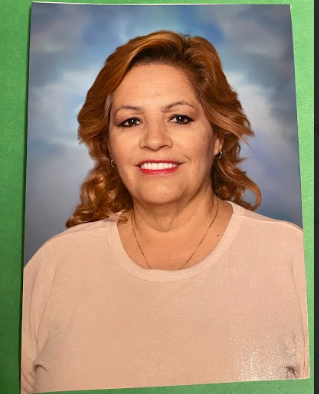
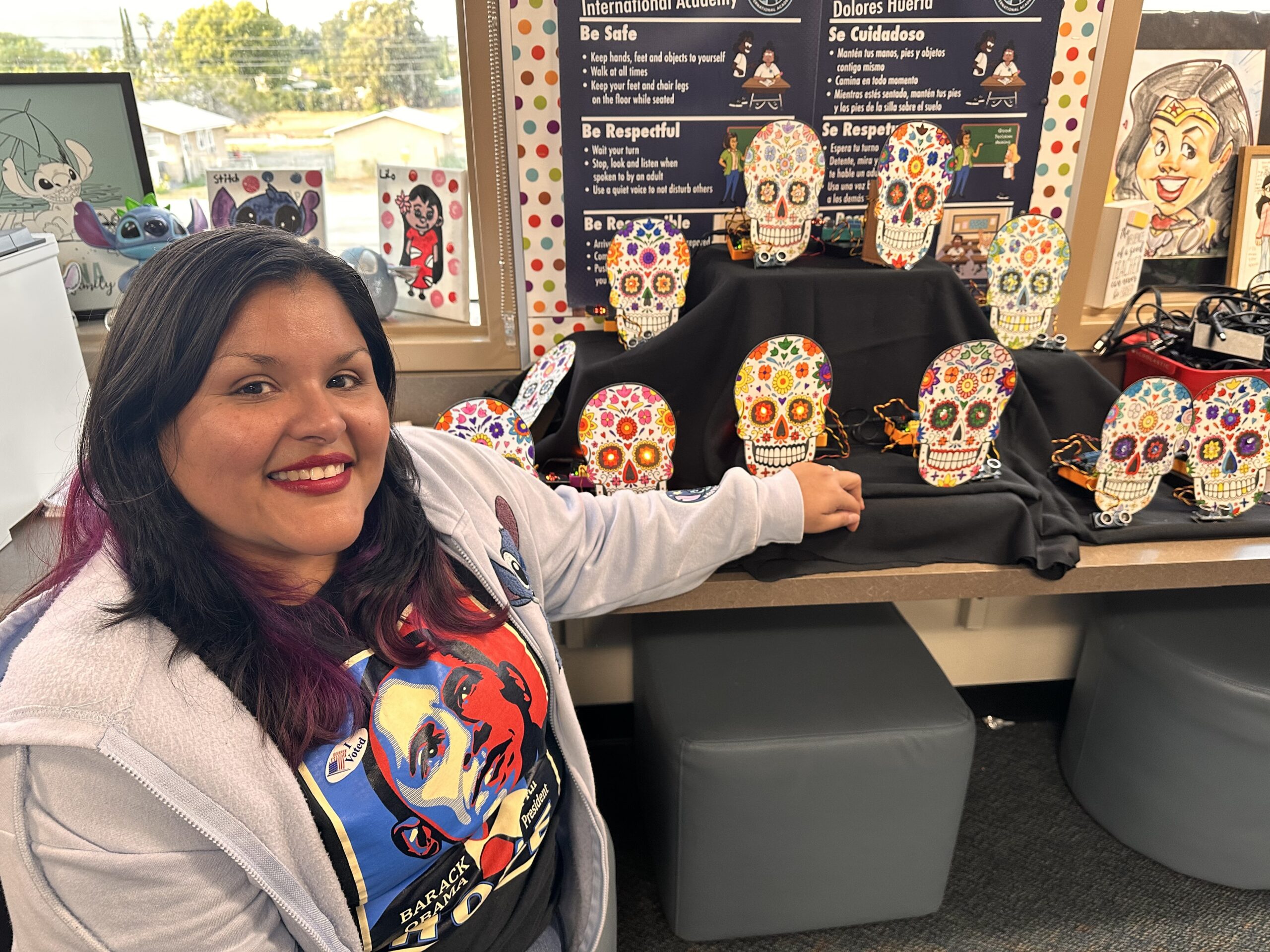
Bailey Joachim is a fourth grade teacher working in the Salida Union School District in the Central Valley of California. She introduced Micro:bit to her student and offers her advice for other educators interested in trying out this approach to engaging students in STEM.

Tell us about your experience using Micro:bit with your fourth grade students.

I introduced the Micro:bit to my students with the goal of engaging them in hands-on learning and making coding accessible and fun. Since incorporating Micro:bits, I’ve seen my students improve in their ability to communicate ideas clearly, discuss challenges, and problem-solve. Even students who typically struggle to stay focused have been highly engaged during these activities. My favorite part of working with Micro:bits is seeing my students have fun while taking pride in their projects. Overall, Micro:bits has transformed my classroom into a dynamic, interactive space. Through their use, I am teaching Computer Science rather than just focusing on the tool itself. Micro:bits have provided an engaging platform, although the real focus in my classroom is introducing students to key computer science concepts like coding, problem-solving, algorithms, and logical thinking. By working with the Micro:bit, students can apply these foundational CS principles in a hands-on, interactive way that makes the learning process both meaningful and fun. Micro:bits simply serve as a practical, accessible tool to bring these important computer science concepts to life.

What advice would you give to educators who are interested in CS but feel unsure where to start?

I would highly recommend this approach to any educator looking to make STEM subjects more engaging and accessible for all students. The Stanislaus County Office of Education has also offered outstanding workshops through Seasons of CS for teachers new to teaching computer science. These workshops provided an opportunity to develop creative thinking and enhance problem-solving skills in the classroom. Being a part of Seasons of CS has boosted my confidence in teaching computer science to my students. Collaborating with other educators at CS trainings allowed us to brainstorm solutions together, learn from each other’s experiences, and share valuable insights. It’s been an amazing experience, and I’m grateful for the opportunity to be part of this year-round workshop. I truly enjoyed collaborating with teachers who are dedicated to bringing out the best in their students and inspiring them to think creatively.

August 2025 Newsletter - Momentum for the New School Year

CAL-MSCS June 2025 Summit

By: Rudy Escobar, Co-Chair, CSforCA

The California Mathematics, Science, and Computer Science (CAL-MSCS) Partnership, is a collaborative program involving multiple institutions and county offices of education to design and provide comprehensive professional learning to math, science, and computer science educators throughout California. At a statewide summit this summer, a team from CSforCA joined local parents to host a session about the role parents can play in supporting computer science (CS) education.

At the June 2025 CAL-MSCS Computer Science Models of Practice Summit held in Monterey, parent involvement was a powerful and inspiring element of the one-day event. Parents expressed deep appreciation for being included in the summit and recognized as essential partners in shaping the future of CS education. Through engaging sessions and meaningful conversations, they gained a stronger understanding of the importance of CS in their communities and how it can open doors of opportunity for all students. The collaborative environment allowed parents from different counties to connect, share experiences, and learn from one another, creating a sense of unity and shared purpose across regions.

A key takeaway voiced by many parents was the need for a call to action, ensuring CS is foundational and accessible at every grade level. Their enthusiasm extended to their appreciation for the leadership and support provided by Rudy Escobar from the Stanislaus County Office of Education and Paula Nazario from UCLA Center X. Parents were especially thankful for the development of the Parent & Family Guide to Computer Science [expected for public release in Fall 2025], a toolkit to provide resources and opportunities for engaging parents and caregivers in promoting CS education. Their involvement in this process affirmed the importance of elevating parent voices in statewide conversations and fostering lasting partnerships to advocate for equitable access to CS education for every child.

CSforCA Co-Chair Rudy Escobar, Paula Nazario from UCLA, and parent leaders who made up the presentation team.
From right: CSforCA Co-Chair Rudy Escobar, Paula Nazario from UCLA, and parent leaders who made up the presentation team.
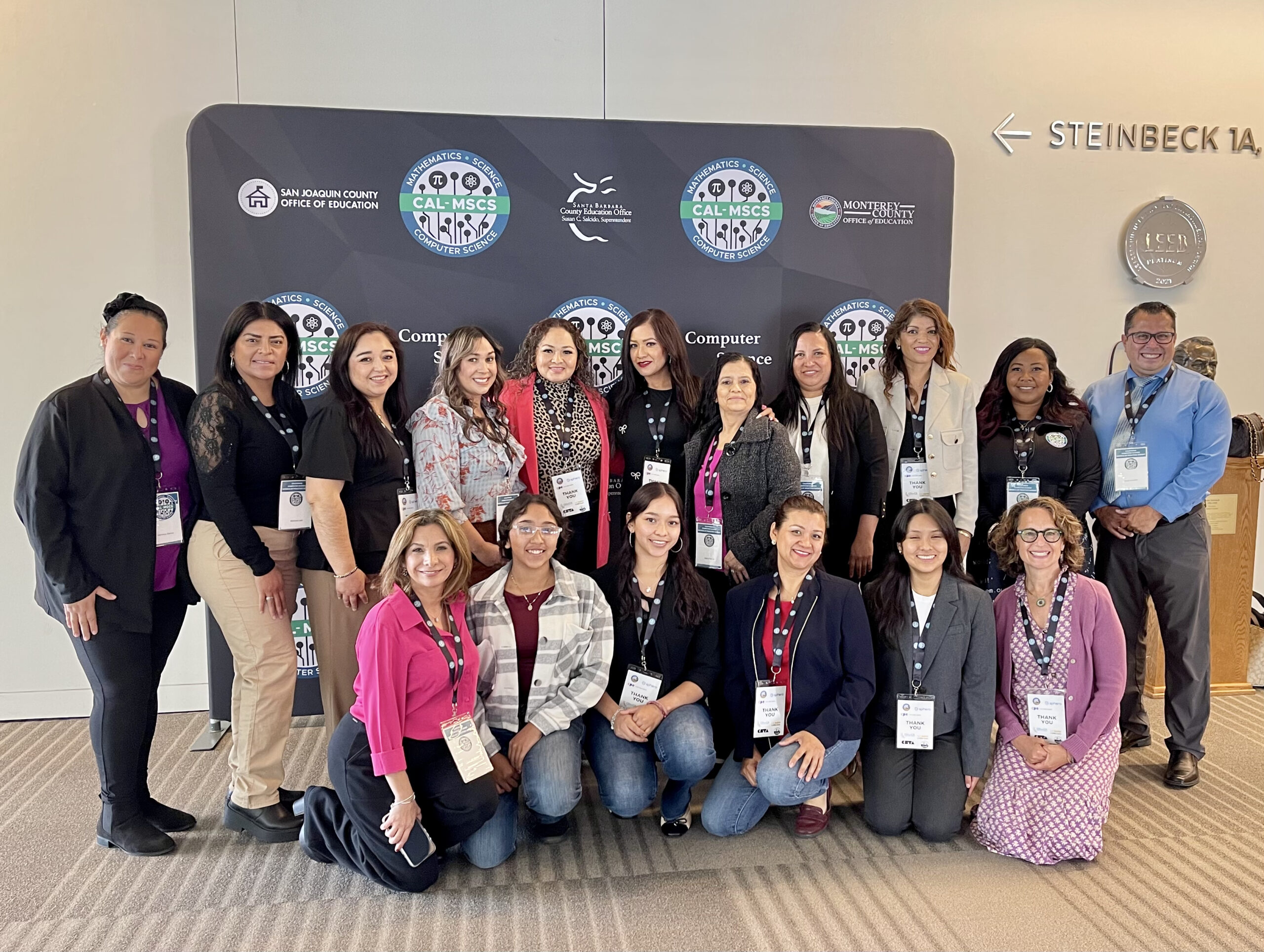
CAL-MSCS Summit participants including CSforCA coalition members and parent leaders focused on uplifting computer science education in California.

A video of the CAL-MSCS Summit was shared by the @calmscs Instagram profile.

Read more about Rudy’s work engaging parents in CS education efforts as a CSTA Impact Fellow here.

CS Spotlight: Janet Brownell

Janet Brownell has been a passionate educator for 27 years, teaching everything from chemistry to engineering in rural school districts. Today, she works as an educational technology coach, helping bring computer science (CS) education to teachers and students in the rural communities of Butte County, California. Her journey into computer science began much earlier than most, blending her background in science with a natural affinity for technology.

When were you first introduced to computer science, and what sparked your interest?

Janet Brownell: My first real introduction to CS was in high school, where I took a class called "CABOL (Computer Assisted Business Operations Lab) Computer Assisted Business Operations Lab," thanks to my mom’s encouragement. I learned basic tech tools like word processors, spreadsheets, and databases—skills that helped me get office jobs instead of fast food gigs. In college, I found myself using technology in my science courses, writing scripts and analyzing data with spreadsheets. I didn’t realize at the time, but I was already practicing what we now call "computational thinking."

What did your CS journey look like after that?

Janet Brownell: I didn’t set out to teach computer science, but I’ve always embraced tech in the classroom. Early in my career, I was one of the first teachers in my district to have Chromebooks. I started teaching kids how to use technology as a tool for problem-solving in science, engineering, and even in their everyday lives. Later, I had the chance to teach an engineering class that included computer science principles, which was a real eye-opener. We used coding to design systems for aeronautical engineering projects—bringing together science, math, and coding.

Were there any obstacles you faced along the way?

Janet Brownell: The biggest challenge in my rural community was the lack of resources. There wasn’t much access to home computing, and kids didn’t always see the value in learning computer science. When I introduced the Hour of Code, not all students showed interest, but the kids who struggled academically really thrived. They felt empowered in a way they never had before. It was a hard sell at first, but seeing those kids light up was all the encouragement I needed to keep pushing for more CS in my classroom.

What makes CS exciting for you?

Janet Brownell: What excites me about CS is its ability to teach problem-solving in so many different contexts. Whether it’s solving a complex science problem or just teaching kids how to use a spreadsheet to organize data, it’s about breaking down a problem and thinking critically. There’s always more than one way to get to a solution, and I love showing my students that.

How has your work in computer science influenced your career as an educator?

Janet Brownell: Moving into educational technology coaching allowed me to help other teachers bring CS into their classrooms. What I’m doing now is less about teaching students directly and more about showing teachers how to integrate CS principles into all subjects. I’ve realized that many teachers are already teaching computational thinking without even knowing it. My role now is to help them see how their existing lessons already align with CS, so they can give their students the skills they’ll need for the future.

What do you see as the value of computer science for all students?

Janet Brownell: CS is a foundational skill for the future. It’s not just for tech jobs; it’s about critical thinking, problem-solving, and creativity. Kids need to understand that learning CS isn’t just about writing code—it’s about learning how to approach and solve problems in new ways. I truly believe CS is a new literacy that every student should have, no matter where they live or what career they want to pursue.

What advice would you give to educators who are interested in CS but feel unsure where to start?

Janet Brownell: Start small. You don’t need to be a CS expert to bring it into your classroom. Think about what you’re already teaching and look for places where you’re already using computational thinking. Whether it’s data analysis in science or organizing information in history, there are CS principles that can fit into almost any subject. The key is to make those connections explicit to your students, so they understand that they’re learning valuable skills for the future. And of course, don’t be afraid to just try something new! Just remember, it’s not about being perfect—it’s about learning how to think differently and approach challenges from new angles.

CS Spotlight: Victoria Mendoza

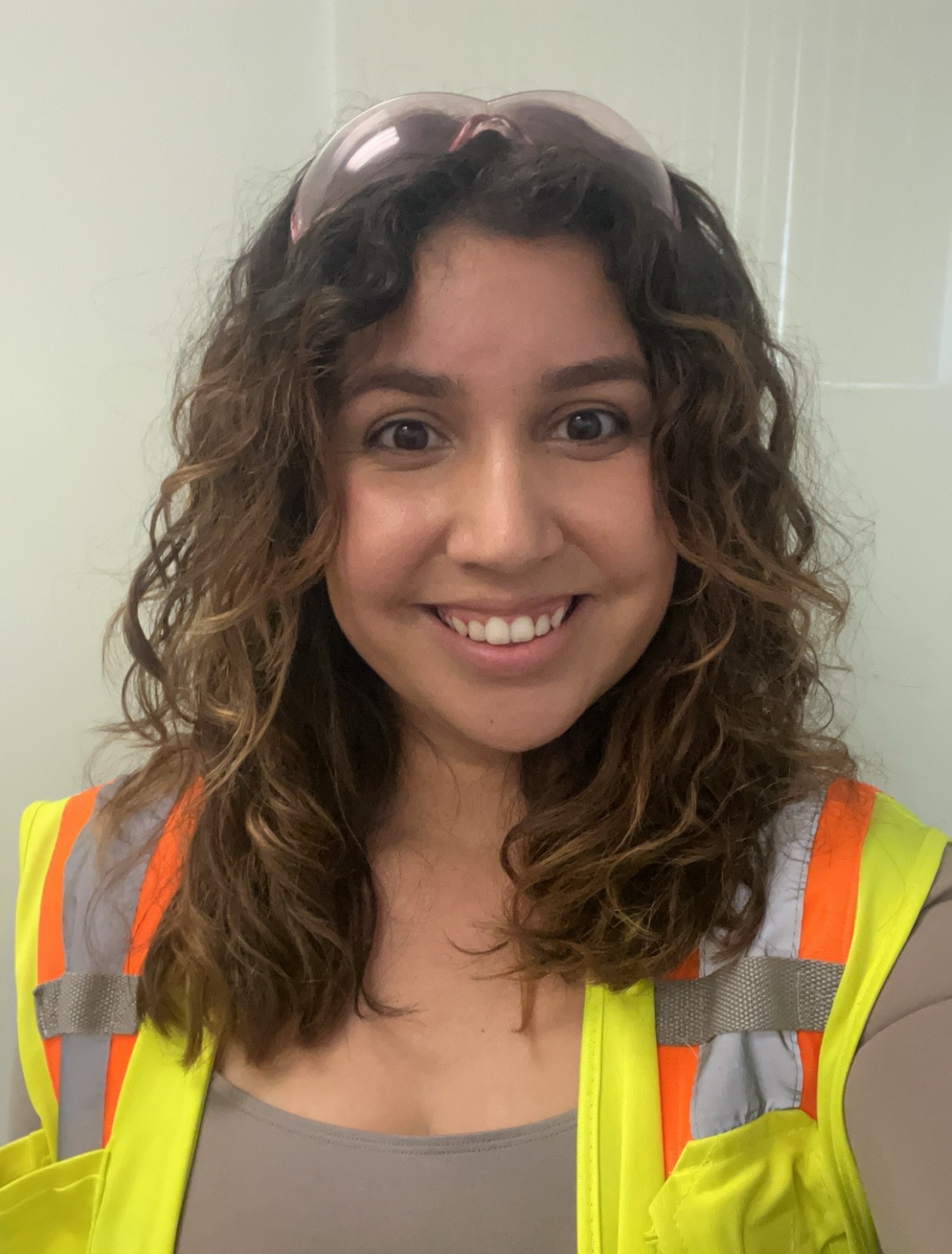
Victoria works as a Project Engineer at Gallo and graduated from UC Merced with a degree in mechanical engineering. Her love of computer science first started in high school, and has continued throughout her career as an engineer.

When were you first introduced to computer science and what first piqued your interest?

Victoria Mendoza: I was first introduced in high school during my senior year. We were offered a class called Engineer Your World. Honestly, I took the class because I didn't know what career route I wanted to take in the future. We had to code a song and that was my first experience with coding or anything computer science related. It was so simple, but at the same time so complex, and it felt amazing to create something so unique. I slowly started to understand all the different ways that you can essentially code to get the same final result.

What did your CS journey look like after high school?

Victoria Mendoza: In college, one of the first classes we had to take as engineers was a coding course. We were offered a choice between Python and Matlab, and I ended up taking the Python course. Throughout college I did eventually have to learn a bunch of different coding languages, but I really felt like that introduction with Python was instrumental to build off of, and helped develop that coding muscle.

Were there any obstacles you encountered along the way? If so, how did you overcome them?

Victoria Mendoza: So the joke that we always had as mechanical engineers was, you were either good at CS or you were really really bad. There was no in between, so it was one of those things where, for me, I felt like Python was easy but at the same time, the other languages like Matlab were really challenging. It was mostly due to lack of exposure and it took a lot of hard work and late nights studying  to feel like I caught up to my peers. I had to learn how to ask my peers for help, because everyone codes so differently. Finding those friends who I could go to in class, office hours with TAs, and some professors was really crucial to getting over some of those coding language barriers.

Was there anyone in particular that you felt influenced your CS journey?

Victoria Mendoza: One professor comes to mind immediately, Professor Sun. He taught a lot of his class on car mechanics, because he felt like cars were something most students knew about and may even go into the industry after graduating. He dedicated so much extra time in the class to teaching us all Matlab and really diving deeper with every student in the class. Instead of a regular final exam, he gave us a basic code and told us we had to figure out how to make it into a car that can do donuts. And we all just had to figure it out in 10 minutes. It was creative and fun and really made me realize how unique CS can be.

What makes CS exciting for you? What do you love most about it?

Victoria Mendoza: I think it's the fact that you can do so much with it. Whether it was making a car do donuts or creating a song back in Engineer Your World, there are just endless possibilities. It’s useful in so many different contexts.

How did learning computer science in college impact your career as an engineer?

Victoria Mendoza: Even though I don’t necessarily use coding in my current role, I know it helps to know it. I work alongside one of the controls engineers who does code and it’s been amazing working side by side with him on projects where I can continue learning and flexing that part of my brain. So even though I don't get to make those changes myself, I do get a better understanding of how the equipment works.

What do you see as the value of computer science for all students?

Victoria Mendoza: Computer science really teaches you how to analyze things differently compared to anything else. You can build code 30 lines long that will give you that same final product as something else that’s only 15 lines long. And when you have an issue come up, it’s all about problem solving. Where did it start? How can I figure out and analyze the problem? Is there another way to look at it? CS teaches you all these building blocks that you can then take in whatever direction you want to get to your final product.

What advice would you give to someone who is interested in CS, but maybe nervous to try something they've never done before?

Victoria Mendoza: Just take the leap and don’t be discouraged. It takes time and practice. If the idea of being creative and getting to build something excites you, I say go for it and learn something new!

AERA 2025 Conference

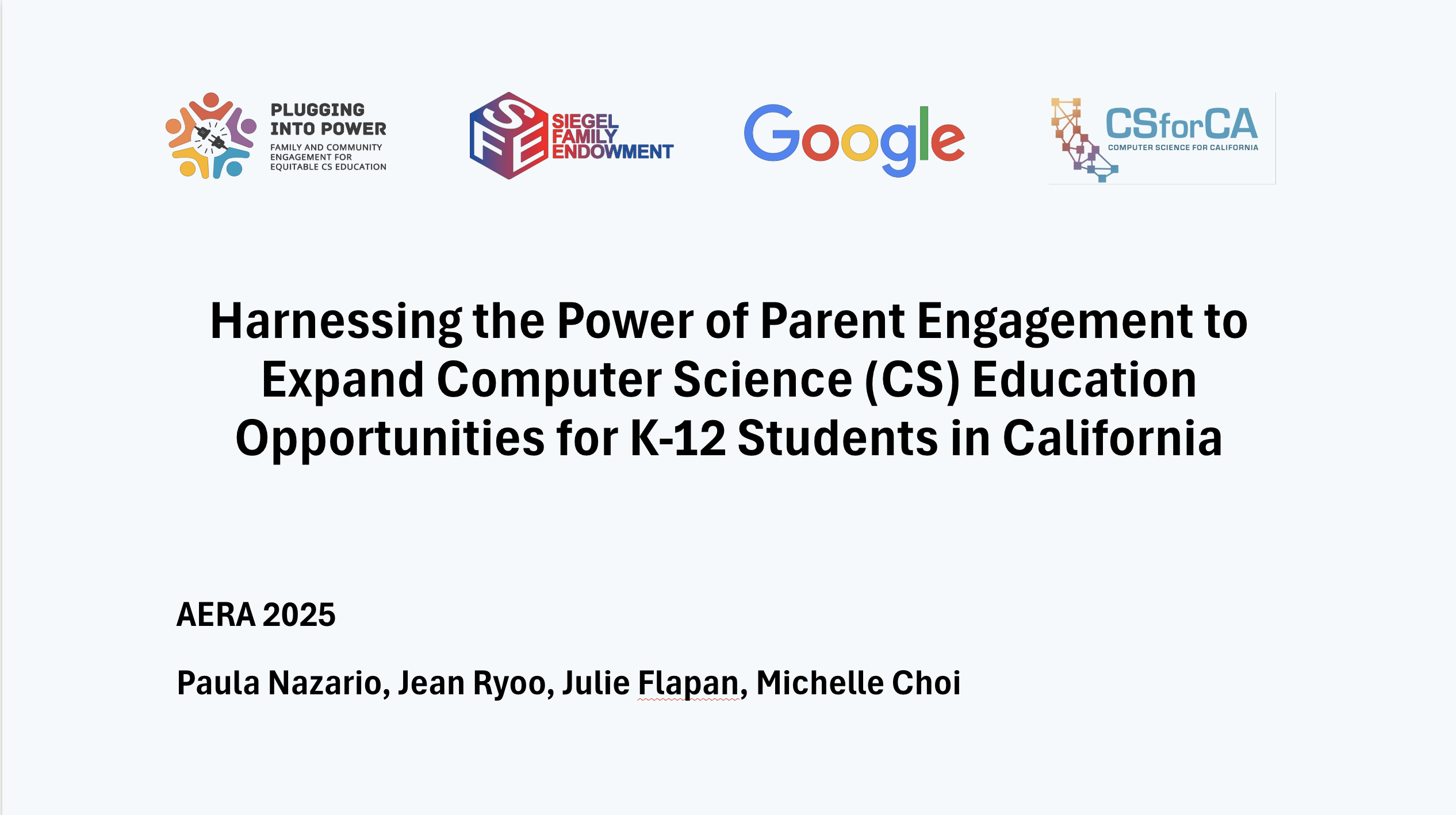
At the 2025 American Education Research Association (AERA) Conference which took place in Denver on April 23-27, 2025, Paula Nazario, Jean Ryoo, Julie Flapan, and Michelle Choi presented on a research project to explore how parents can help expand K-12 CS education as advocates on behalf of their children and all students to receive quality CS learning opportunities in school.

Click on the image below to view the presentation:

School Leaders Overcome Barriers and Expand Opportunities in K-12 Computer Science Education

CSforCA, in partnership with Seasons of CS, hosted a 3-day professional learning event February 23-25, 2025 at the UCLA Luskin Conference Center for over 20 school leaders from districts across California interested in increasing access to CS for their students. Co-hosted by UCLA Computer Science Equity Project, with generous funding from the Educator Workforce Investment Grant (EWIG), administrators used data to identify gaps in participation and delved into what it means to meaningfully integrate CS learning and support for all students to learn computing. The facilitation team included experienced Champions , program managers, and researchers, all guided by CSforCA’s common mission of bringing high-quality CS education to all students in California.

Facilitation Team:

The workshop goals were as follows:

Attendees learned about what is CS (and what it is not), why it’s important to learn CS, what is the state of CS in California, and what resources are available such as the California K-12 CS Standards and CS Equity Guide.  The school leaders were particularly moved by guest speaker Jane Margolis, co-author of Stuck in the Shallow End, that provided the initial research that helped spark the CSforAll movement.

Participants connected with one another and experienced CS hands-on through unplugged activities, table conversations, group work, and experimenting with AI tools.

Attendees were given journals to take notes on their experiences and were asked thought-provoking questions about how they personally viewed equity and access that prompted them to reflect deeply on their biases and foster meaningful connections to this critical work.

To help people plan for next steps, participants read case studies and discussed common challenges to equitable implementation. They also received practical guides and resources for navigating complex systemic change to take home for their district implementation planning.

Most importantly, the convening provided a space and time for administrators to step away from their daily business to meet new colleagues and build new networks with like-minded people over meals, common challenges, shared problem solving, and new ideas. Before the event even ended, the group had already initiated planning follow-up meetings to continue connecting to become accountability partners to thinking through how to bring the ideas from the workshop into their schools with a concrete action plan. Way to go team!

A post-event survey showed that the most common response for the "best aspect" of the academy was networking and finding new resources. Here are what one of the attendees had to say:

“I found an intense and meaningful cadre of like-minded souls here at the Computer Science Equity Conference at UCLA.  With so many demands on our instructional work, I have come to thank my own lucky stars that I have been invited to this network of thoughtful leaders who serve such a noble purpose.”
Elementary School Principal
Tweet

Special thanks to all who participated in the workshop!

Interested in increasing CS in your school or district? Check out the CS Equity Guide or see about attending an upcoming Seasons of CS professional development event.

Insights from the Field: 10 Takeaways from Our Graduating Leaders

As much as we know that teachers are key to equitable implementation of computer science in their classrooms, we also know that school leaders hold the locks. In an effort to address obstacles facing teachers to expand access to computer science education, CSforCA co-created a workshop designed by and for school leaders. The centerpiece of this equity-focused workshop is the CS Equity Implementation Guide to help troubleshoot common dilemmas. We encourage school leaders looking to drive computer science education in California to explore this resource, along with our top ten takeaways from the workshop:

  1. Find a community of like-minded leaders to support you and learn together on your CS journey.
  2. Use local and state data to examine patterns of who has access to CS in your region or school.
  3. Develop an action plan with clear goals to keep you on track to expand access and equity.
  4. Explore the history of equity and access in CS, like Jane Margolis’s book Stuck in the Shallow End or the graphic novel Power On!
  5. Support your teachers by signing them up for Seasons of CS, a yearlong computer science professional development program.
  6. Join your local chapter of Computer Science Teachers Association, a supportive environment for K-12 CS educators.
  7. Partner with your local higher education institutions to take advantage of pre-service teacher education opportunities, including the CS supplementary authorization.
  8. Integrate computer science with other disciplines leveraging the Math, Science, Computer Science Partnership Grant and the California Subject Matter Projects.
  9. Sign up with the CSforCA coalition and advance efforts to broaden participation in computing.
  10. Spark joy in learning CS!

School leaders play a pivotal role in the success of computer science education. While working as change agents within the CS education landscape, school leaders are able to assist in unlocking some of the gates that have been barriers within their systems. School leader Darren Alcala shared, “Systems of support are needed. Without them, there is a cog in the system that is missing. This can be accomplished when both teachers and school leaders can see the value of CS education.”

CS Spotlight: Fern Alcazar

Fernando Alcazar, also known as Fern, is a recent graduate from UCSC Baskin School of Engineering who studied computer science and game design. Growing up in the rural community of Waterford, he knows the importance of equitable access to CS education.

When did your CS journey first start? What first piqued your interest?

Fern Alcazar: I've dreamed of making video games since I was little. My mother's favorite story is when she was pregnant with little Fern, she would sit in her recliner in her room, my pops would come in late from work from the ranch, and he would come into the room and turn on the Nintendo 64. Allegedly, when the system would boot up and the galloping of the horse from Zelda would be heard from the TV, apparently little baby Fern would start kicking. It's a story I love to tell because it goes to show how strongly my parents work to keep the dreams of their kids alive. From kicking in my mom’s belly to Zelda to now graduating with a degree in video games; it’s inspirational when immigrant parents work so hard to not only keep the family alive, but also the dreams of the family alive too. So that’s where my CS journey started, with family.

Okay, so we started with a dream that's now becoming reality. Were there any obstacles along the way? If there were, how did you overcome them?

Fern Alcazar: I definitely faced a lot of obstacles, and will say I was able to overcome them because of one, my family, and two, my positive attitude. Some of the bigger obstacles I faced when pursuing a college degree and CS were some of the emotional baggage I carry as a first generation son of a rancher as well as geographical determinism being from a small, rural town in California. We never had solid computer science opportunities, but we did have a class called Engineer Your World which exposed me to a tiny piece of the world of CS in highschool. Deciding to pursue CS felt at times like a decision between family or Silicon Valley. It wasn’t until later that I realized I can pursue my dreams and in doing so stay connected to my family and my cultural values through the stories I tell when creating video games.

Were there any people who were particularly influential in fostering your passion for CS?

Fern Alcazar: There were a few outstanding teachers that were in my corner and it made all the difference. Having them tell me I can do it, that I should get out there and chase down this dream. Having someone believe in you like that is everything. Some extraordinary faculty, as well as a great web of friends, kept me going through the transition out of Waterford.

What advice would you give to someone who is interested in CS, but maybe doesn’t know where to start?

Fern Alcazar: I actually was a mentor to freshmen through the Basking Engineering Excellence Scholars (BEES) program during my junior year at UCSC. They were my BEES and I fell in love with them, because I saw so much of myself in their struggles and their passions. Not only would I teach them CS, but we’d go to dinners around the UCSC community, have movie nights, and generally be there for each other through this difficult transition from high school to college. I still receive phone calls from my BEES to this day. The advice I’d give now to anyone hoping to start their CS journey is to just breathe. It’s something I tell myself all the time, but something so simple can have a huge impact on what we do. You’ve got to just get out there and go for it, but remember to breathe along the way and that everything will work out how it’s supposed to.

CS Spotlight: Adela Alcazar

Adela Alcazar is a recent graduate from UC Davis currently working at the Lawrence Livermore National Laboratory who knows the value of computer science. As a first generation student, she understands how difficult it can be to navigate the world of CS and hopes to help other high school students get started on their CS journey.

When were you first introduced to computer science? What piqued your interest?

Adela Alcazar: I was first introduced to computer science in my junior year of high school, in an elective course called Engineer Your World where we did a short section on programming. I’d always wanted to go into a science field, and considered being a scientist before I knew what engineering was. I was not particularly interested in only learning and discovering how things work. Through that course, I learned more about the creative, problem-solving nature of engineering and also CS, and grew more and more interested in what a career in that field could be.

Were there any obstacles as you started your CS journey? If so, how did you overcome them?

Adela Alcazar: The high school I went to was in a rural community and there weren't many courses offered simply due to the lack of demand or teachers available. The first year Engineer Your World was offered was 2017, and we had to share laptops that the school provided. However, we couldn’t take those home, which meant that I often had to use my family’s old computer that frequently crashed or froze. That was definitely challenging alongside being a first generation student who was navigating learning subjects like CS and applying to college with limited support and resources.

Were there any people who were helpful or particularly influential in your journey to learning CS?

Adela Alcazar: I have to thank Janet Brownell. She was the Engineer Your World teacher and did a fantastic job fostering my curiosity in engineering and programming. I was always interested in STEM, but the classroom experience that Janet provided pushed me to want to learn more. Thanks to her, I had my first introduction to engineering and soon after, computer science once I started college.

What did pursuing CS look like once you got to college?

Adela Alcazar: I started college as an aerospace engineering major, and double-majored in mechanical engineering. After taking a MATLAB course my freshmen year, I really enjoyed the programming side of engineering and continued to pursue that interest through school clubs and projects. At the time, I was simply doing what I loved, but I didn’t realize how influential computer science would be in landing my current job.

Can you share a bit more about your current job? What have you been up to since graduating?

Adela Alcazar: Shortly before graduating, I was hired by the Lawrence Livermore National Laboratory thanks to the CS skills I developed alongside my dual majors. Currently, part of my role includes using programming languages like Python or MATLAB to solve engineering problems.

What do you see as the value of computer science for all students?

Adela Alcazar: It’s very important for students to start learning these skills from a young age. Everything relies on computers. Everything has some sort of computer science aspect tied to it, and technology continues to move at a very fast pace. So we need students to be up to speed and knowledgeable about computer science because it will be tied into almost every job out there.

What advice would you give to someone who's interested in CS but nervous to try something new?

Adela Alcazar: Just go for it. It's not going to hurt anything to try and it’s never too late to learn. When I started college, a lot of students had already taken multiple computer science courses and I couldn’t help feeling like I was behind. But you're only going to be behind if you don't start. If you’re interested, I say go for it!

CS Spotlight: Violet Avelar Romo

Violet has taught at Los Angeles United School District for the last 12 years. She is currently teaching Special Ed with 4th and 5th graders with plans to retire at the end of 2024.

When did you first start teaching computer science?

Violet Avelar Romo: One of my fellow LAUSD teachers actually encouraged me to learn more about computer science by signing up for the Seasons of CS professional development program. I quickly realized just how foundational the skill of computer science is. I realized my students need to know this skill, this system, because it will enhance all of their learning. My own skills on the subject are definitely not terrific, but I always tell my students if you don’t know something to ask somebody who does; and that’s exactly what I did with computer science.

Can you share a bit more about what it’s like teaching CS at your school?

Violet Avelar Romo: One of the first things I learned and brought to my classroom was ScratchJr. It’s a program that teaches you step by step sequencing. I was able to teach my students basic sequencing through coding and math at the same time. It became clear that there were all of these foundational skills tied into computer science, skills that my Special Ed. students enjoyed learning and that was amazing to see. To be honest, when it comes to computers, I was learning with my students. It was fun to bring a new CS game to class and then try to figure it out together. The biggest thing for me was realizing that it’s okay to not know everything as a teacher; that your students can teach you, just as much as you teach them.

Why is equity in computer science important to you?

Violet Avelar Romo: In my time as an educator, I’ve taught all grades and different learning abilities. I’m seeing kids who typically wouldn’t be excited about learning get excited about computer science and that’s so important. Computer science is everywhere because technology is everywhere. Giving every kid the tools to learn and grow in a technologically driven world is equity to me.

What advice would you give to a teacher interested in bringing CS to their classroom?

Violet Avelar Romo My first piece of advice is to embrace learning. I think of myself as a lifelong learner as I’m sure many of us teachers do. Don’t give up on teaching CS just because you aren’t an expert. You can learn with your kids. I know teachers want to see their students succeed in their classroom and in life. So let me tell you, computer science is here to stay and it’s going to open more doors to our students. It’s our job to prepare them and to help them learn this skill now so they can use it later.

CS Spotlight: Ashley Silva

Ashley Silva is a mom of two and currently teaches 6th grade at the Dolores Huerta International Academy in Fontana, a Spanish dual immersion school. After starting as a substitute teacher, Ashley fell in love with the students and community at the Academy due to its multicultural nature.

How did you first get involved in computer science education? What drew you to teaching computer science?

Ashley Silva: My first introduction to computer science was through the Teacher Innovator Institute through the Smithsonian in Washington DC. I applied for their 2022 cohort following COVID, and became one of 13 teachers accepted across the country. The program is designed for teachers looking to embrace STEAM backgrounds and new ways of bringing it to the classroom. It’s a two-year commitment, where I got to spend two weeks in the summer with other teachers in DC exploring the museums and talking about how we could integrate STEAM into our curriculum. Prior to that summer, I’d never learned about computer science, but once I was introduced I just wanted to learn more. Since then I have applied and participated in Seasons of CS professional development to continue my own learning and bring it to my classroom.

How has teaching CS been at your school? What’s it like bringing this skill to the classroom?

Ashley Silva: Since participating in Seasons of CS, I’ve been able to get my hands on new tech to bring into my classroom and it's truly been the magical piece that was missing in my teaching. It’s drawn even the quietest kiddos out of their shell and gotten them invested in learning. I’ve started plugging CS learning into all content areas I teach because the kids love it so much. Computer science is giving them another way of expressing themselves and an opportunity to see what they are capable of. It’s been very empowering for the students and even for me as the teacher. I’ve even seen an increase in attendance since building CS learning into our regular subjects.

Why is equity in computer science education important to you?

Ashley Silva: Computer science shouldn’t just be for “science enrichment” programs or for students excelling and taking robotics. It should really be something every student has the opportunity to learn, because it’s something every student will need to know at some point in their education or career. I try to expose as many students as I can to computer science and encourage other teachers to do the same.

Do you have any advice for a fellow teacher interested in learning and bringing CS to their school?

Ashley Silva: Take all the opportunities that are thrown at you. I know we can't do everything, but if there's something that catches your eye, try it. I know two years ago, one of the opportunities that was thrown my way was getting my computer science supplementary authorization. At first, I have to be honest, I was a little worried and not sure if it was going to be for me since I was so new to teaching. Eventually though, I just decided to go for it and I’m so glad that I did. At the end of the day, we are teaching our kids to be brave and to learn new skills so we should too.

How do you find time for the additional learning opportunities you’ve mentioned so far?

Ashley Silva: If I’m being honest, I don’t know! I sit down and I look at my calendar and sometimes things get out of hand, but for the most part, they all balance out and I never regret taking opportunities as they come. I’m lucky to have a very supportive administration at my school who I can communicate with about the importance of additional learning opportunities. My administration has seen what I do with these trainings and the kinds of projects I bring back for my students. They know this work is important and valuable to the students and to the school so they work with me to fit it all in my schedule.